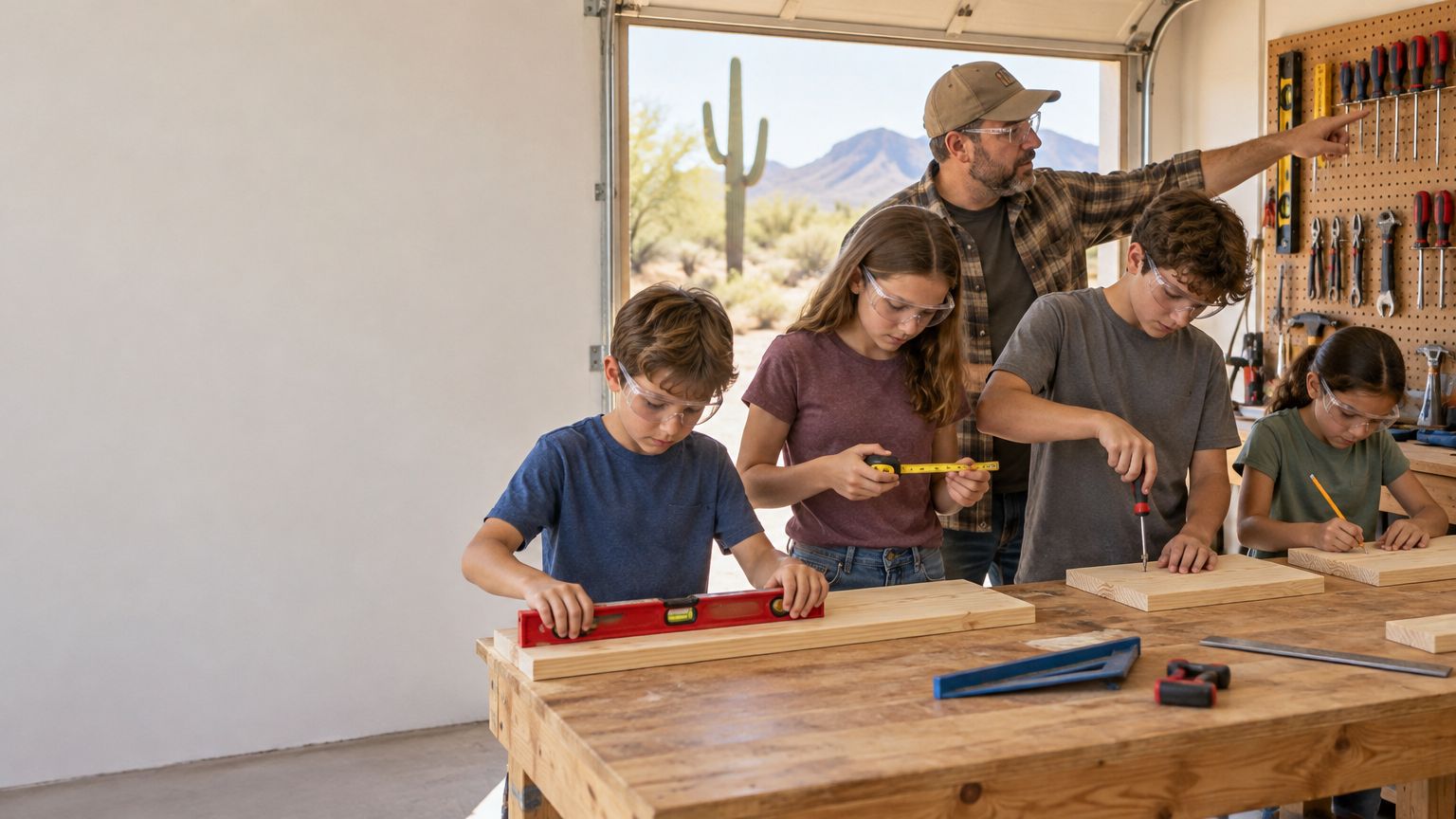
Meet the Toolbox
Name every tool in the box, and learn which end to hold.
AI-generated image
The curriculum · 14 classes · 3 levels
Classes work standalone — take one, take all fourteen. Taken in order they build: you cannot patch drywall until you can measure, and you cannot hang a TV until you understand anchors.
Name every tool in the box, and learn which end to hold.
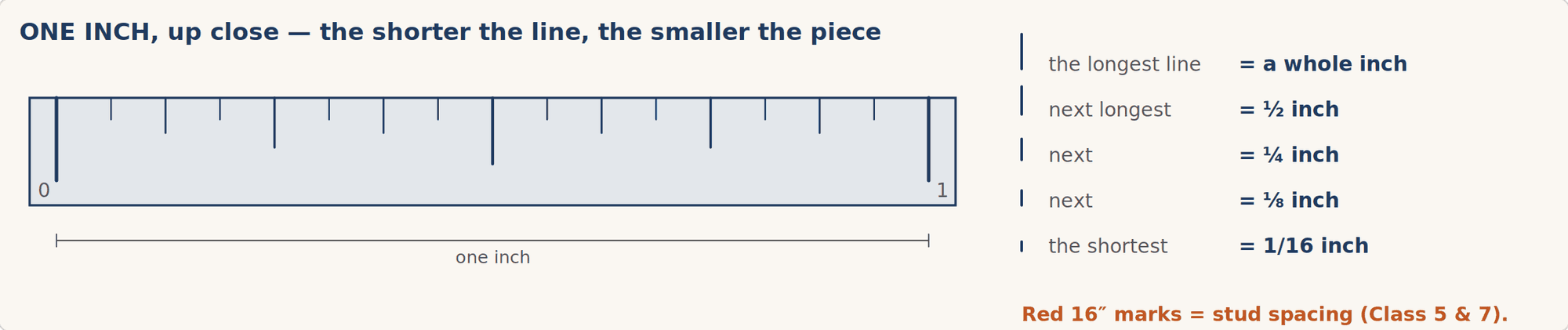
Read a tape and mark a line someone else could cut to.
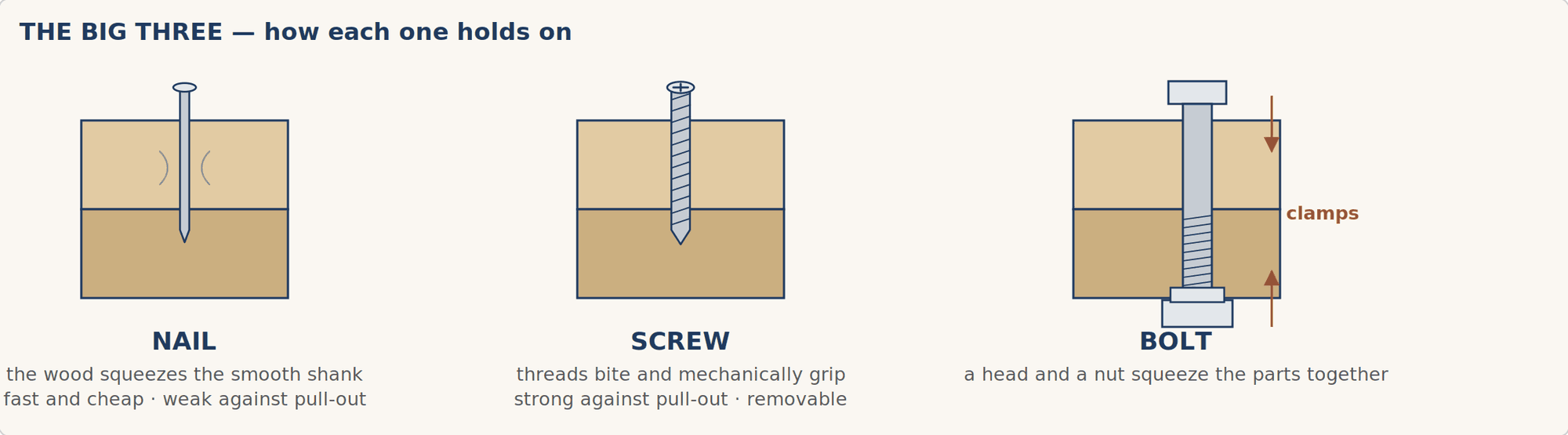
Nail, screw or bolt — pick the right one and know why the pilot hole matters.
Bits, clutch, both hands on the tool. Earn the drill license.
Ages 10+ · Drill licenseFind the stud, pick the anchor, hang something that stays up.
Match the fix to the hole, fill a ding, feather it, set a mesh patch.
Studs, brackets, and the weight rating nobody reads.
Open the tank, name every part, stop it running.
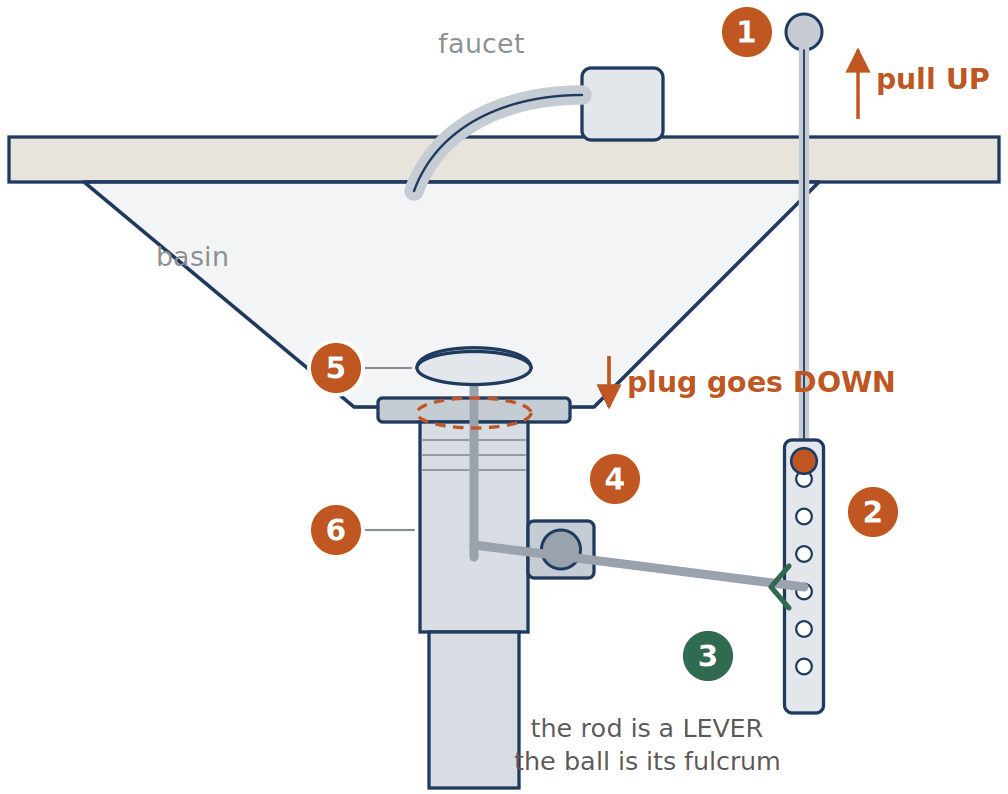
Clear the trap, work the shut-off, fix the stopper that will not seal.
Stop the squeak, fix the sagging door, swap a handle, make it latch.
The finish work that decides whether a repair still looks like one.
Read the diagram, build it square, then strap it to the wall.
Breakers, GFCI and the water shut-off — what to do before the adult arrives.
Bring something broken. Diagnose it, fix it, explain how you knew.
Bring a broken thingThree age bands · One curriculum
Every class is written in three bands. Same subject, different job, different tool in hand — so siblings can take the same class without one of them being bored or lost.
Name it, hold it, hand it over correctly. Hand tools only. Success is vocabulary and grip.
Run the step start to finish with an adult watching. Earns the drill license.
Diagnose before they touch anything, then do the repair and explain why it worked.
Earned, not given
Earned in Class 4 by demonstrating it, not by turning ten. Required before any drill touches a hand.
The highest bar in the course. In every class below it, the knife is instructor-only — no exceptions, no “just this once.”
Kids learn to look at the head before they reach for anything — which is why Phillips and Pozidriv get taught side by side.
One straight slot — the oldest shape, and the one that slips most.
In this classMost household screws here use it. A #2 fits nearly all of them.
In this classA cross PLUS four ticks at 45°. A Phillips driver will chew it.
Know the nameThe screw stays put on the tip. Common in Canada and on decking.
Know the nameThe little L-key in every flat-pack box. Back in Class 12.
Know the nameCars, appliances, electronics. Hard to strip — that is the point.
Know the nameWhere the maker would rather you did not look inside.
Know the nameEach shape solves one problem:
Ask which problem each shape is trying to solve. They will work most of it out themselves.
Kids get the printed sheet to take home, so the explanation does not leave when the hour does.
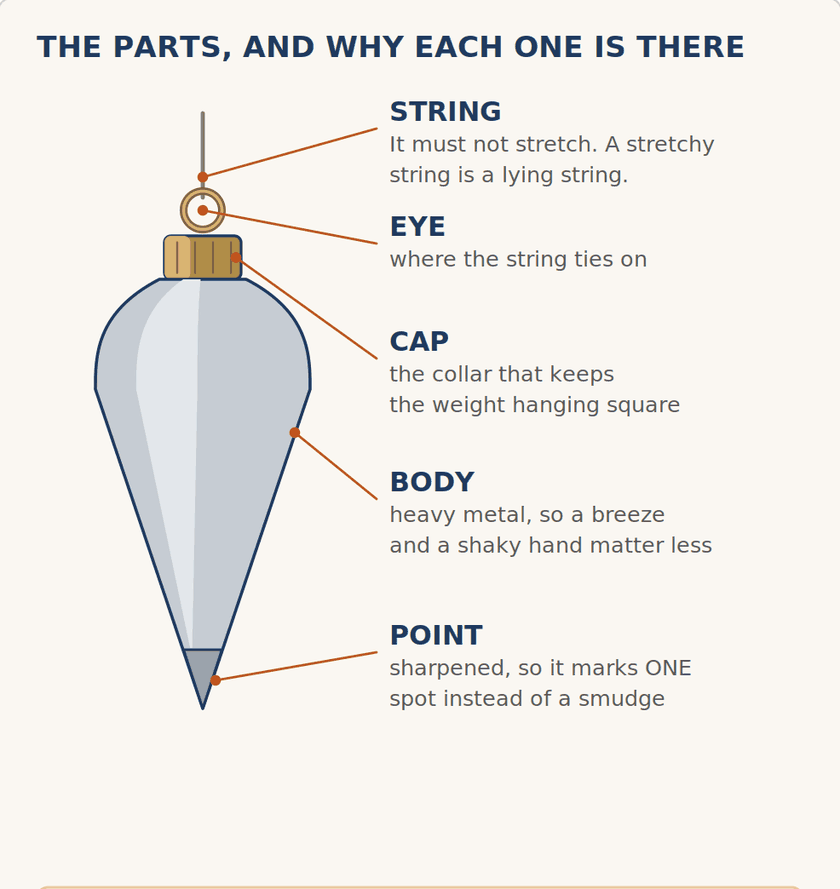
Why this matters for a parent: the curriculum is written down — a run of show to the minute, a materials list, and the specific things that go wrong. You are not booking an hour of someone winging it.
Next step
Tell me your kids’ ages and what you want them to be able to do, and I will tell you which class to start with.